


Rhodiola Rosea
Rhodiola Rosea
🧠 Sharper Focus Under Pressure
⚡ Clean, Crash-Free Energy
🌿 Improved Stress Resilience
💸 30-Day Money-Back Guarantee
Couldn't load pickup availability

I started taking this Rhodiola Rosea a few weeks ago, and the difference in my morning energy is huge.

I bought this mainly for stress relief, and it really works. I feel more balanced throughout the day and don’t get overwhelmed as quickly. I noticed a slight improvement in mood too

I use this before my workouts and also on busy workdays. It gives me stamina without that crash I get from caffeine.


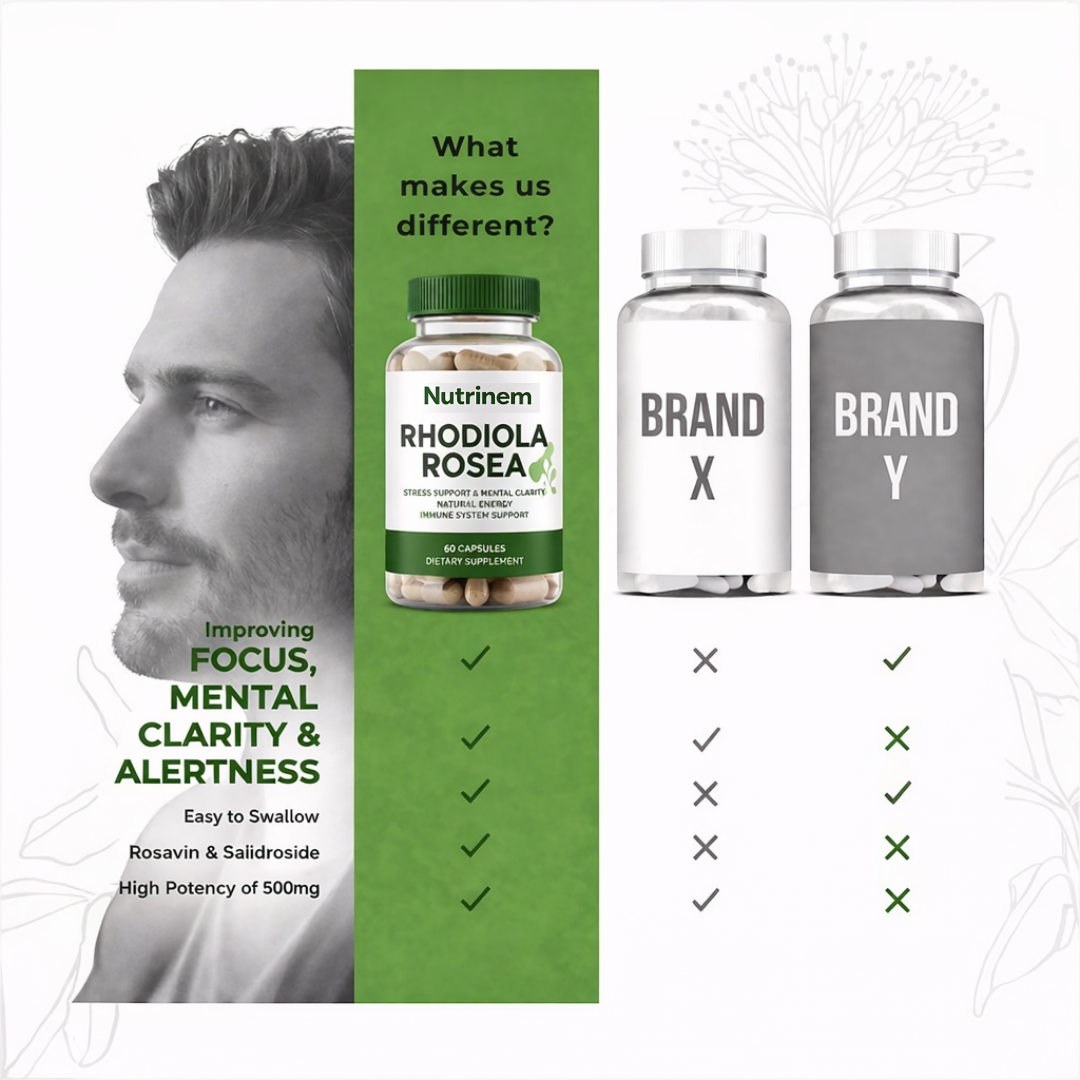
Rhodiola Rosea

Natural Stress & Wellness Boost
Rhodiola Rosea contains natural compounds like salidrosides and rosavins that provide antioxidant support, helping protect cells from everyday stress. Research suggests it may also promote healthy blood flow and support cardiovascular wellness, while early studies indicate potential benefits for balanced blood sugar and metabolic function. Traditionally, it has been used to help maintain immune health and overall resilience.

Loved by more than 26,000 customers 💙
FREQUENTLY ASKED QUESTIONS
FAQ
What is Rhodiola Rosea?
Rhodiola Rosea (Arctic Root / Golden Root) is an adaptogenic herb that grows in cold, high-altitude regions.
- Classification: Adaptogen (helps the body resist and cope with stress).
- Key Benefits: Reduces stress-related fatigue, improves mental performance (focus and memory), and boosts physical endurance and mood.
- Active Compounds: Rosavins and Salidroside.
- Use: Traditionally used to increase physical stamina and combat fatigue.
How does Rhodiola Rosea work?
Rhodiola rosea works primarily by acting as an adaptogen, which helps the body handle stress.
- Balancing Stress Hormones: It helps to normalize the activity of the HPA (Hypothalamic-Pituitary-Adrenal) axis, which regulates the body's stress response. This can help prevent excessive or prolonged release of stress hormones like cortisol.
- Modulating Neurotransmitters: It influences levels of brain chemicals like serotonin, dopamine, and norepinephrine, which helps to improve mood, reduce fatigue, and enhance cognitive function.
- Boosting Cellular Energy: It may enhance the production of ATP (cellular energy), contributing to increased physical and mental performance.
Who should use Rhodiola Rosea?
Rhodiola Rosea is typically used by people experiencing:
- Stress and Burnout: Those dealing with chronic stress, anxiety, or high pressure (e.g., during intense work periods or exams).
- Fatigue: Individuals suffering from physical or mental tiredness, or reduced energy and concentration.
- Athletes: Those looking to enhance physical endurance and improve recovery time.
Important Note: It is generally used by healthy populations to non-specifically enhance the body's resistance to stress. Always consult a healthcare professional before starting any supplement.
When will I start noticing results?
You may notice effects quickly, but full benefits take longer:
- Quickly (Hours): Some people feel an immediate lift in energy, focus, or anti-fatigue effects within 30 minutes to a few hours of the first dose.
- Short-Term (1-2 Weeks): Noticeable improvement in stress and general fatigue with consistent daily use.
- Full Benefits (4-6 Weeks): The greatest improvement in mood, cognitive function, and long-term stress resistance is usually seen after about 4 to 6 weeks of regular supplementation.
How should I take Rhodiola Rosea?
The best way to take Rhodiola Rosea is generally as follows:
- Dosage: The most common effective dose is 200 mg to 600 mg per day.Note: It is often recommended to start low and gradually increase the dose.
- Best Time: Take it in the morning or early afternoon. Since it can have a stimulating effect, avoid taking it right before bedtime.
- How: Most studies use a standardized extract (typically 3% rosavin and 1% salidroside) in capsule or tablet form. Take it on an empty stomach for best absorption.
- Duration: It is typically taken for 6 to 12 weeks for full benefits; long-term safety (over 12 weeks) is less studied.
Always consult a doctor before starting to ensure the correct dosage for your needs and to check for potential drug interactions.
Does Rhodiola Rosea contain caffeine or stimulants?
Rhodiola Rosea does not contain caffeine.
While it is often described as a "stimulant" (specifically, a psychostimulant) and increases energy, it does this through different mechanisms than caffeine:
- No Caffeine: It does not naturally contain caffeine.
- Stimulant Effect: It has a stimulating, anti-fatigue effect due to its active compounds (Rosavins and Salidroside) which modulate stress hormones and neurotransmitters like dopamine and serotonin.
Because of its mechanism, Rhodiola is sometimes combined with caffeine to create a synergistic effect, but it is not a stimulant like coffee itself.
Is Rhodiola Rosea safe?
Rhodiola Rosea is generally considered safe for short-term use (up to 6 to 12 weeks) at recommended doses for healthy adults.
Safety Summary:
- Side Effects: Usually rare and mild, such as dizziness, dry mouth, headache, or sleep issues (if taken too late).
- Interactions: Caution is necessary if you take: Antidepressant medications. Diabetes medications (it may lower blood sugar). Blood pressure medications (it may lower blood pressure).
- Avoid Use If: You are pregnant, breastfeeding, or have certain autoimmune diseases (like MS or RA), as it might stimulate the immune system.
Always consult a healthcare professional before starting to ensure it is safe for your individual health condition and to check for medication interactions.
Can I take Rhodiola Rosea with other supplements?
Generally, yes, Rhodiola Rosea can be taken with other supplements.
In fact, it is often combined (or "stacked") with other supplements to enhance specific effects:
- Other Adaptogens: It is commonly combined with Ashwagandha (which is more calming) or Ginseng to create a balanced stress-management stack.
- Nootropics: It is often paired with cognitive enhancers like L-Theanine (to smooth its energizing effect), Lion's Mane mushroom, or Bacopa Monnieri for better focus and brain health.
However, be cautious about stacking it with:
- Other Stimulants: Combining high doses of Rhodiola with other potent stimulants (besides a typical cup of coffee) may increase the risk of overstimulation, anxiety, or sleep issues.
Crucial Advice: Always check with your doctor or pharmacist first, especially if you are taking any prescription medications, as Rhodiola can interact with drugs for depression, blood pressure, and diabetes.
Do I need to cycle off Rhodiola Rosea?
Yes, cycling (taking breaks) is often recommended, but it depends on the reason you are taking it.
- For Acute Stress/Performance: If you take it only during periods of high stress or intense training, you stop when the stressful period ends.
- For Chronic Use: Most clinical studies on Rhodiola only last 6 to 12 weeks. Long-term safety (beyond 12 weeks) is not well-studied.
- Preventing Tolerance: Cycling is generally advised to prevent your body from building a tolerance (diminished effect) to the adaptogen.
General Recommendation: Limit continuous use to 8 to 12 weeks, followed by a break of at least 1-2 weeks.
What if it doesn’t work for me?
If Rhodiola Rosea doesn't seem to work, consider these short actions:
- Check the Dose/Quality: Ensure you are taking a standardized extract (usually 3% Rosavin and 1% Salidroside) in the recommended range (200-600mg) and using a high-quality brand.
- Give it Time: Allow up to 4 to 6 weeks of consistent daily use to see the full benefits for chronic issues like stress.
- Try an Alternative: If the quality and time are right, your body may simply respond better to a different adaptogen, such as Ashwagandha, Ginseng, or Holy Basil.